
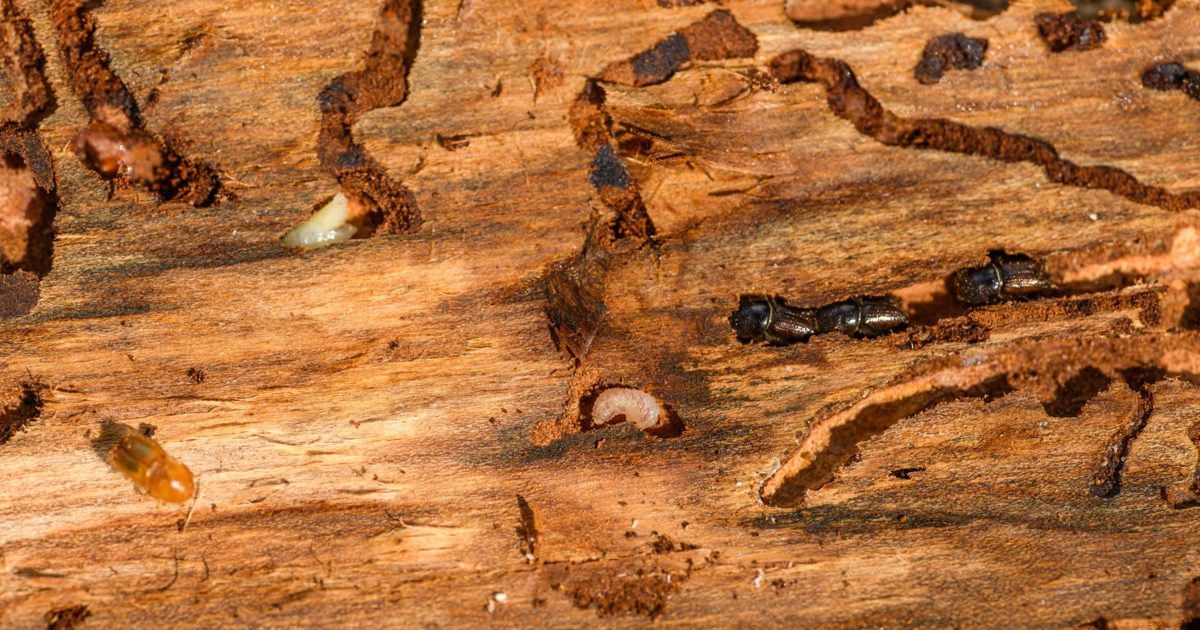
Termite control starts with spotting the problem early. A termite infestation in a Texas home shows itself through swarmers, mud tubes and damaged wood, and a licensed termite company confirms it with an inspection, treats the soil or the wood, and checks the result on later visits. Catching termites early brings 3 benefits: smaller repairs, a shorter treatment, and a clean report when the house sells. This guide covers the signs, the conditions that draw termites to a house, the 4 treatment options the state names, and the paperwork a termite company owes you before any work begins.
Which termites live in Texas?
Texas has 3 termite groups that matter to a homeowner: subterranean termites, drywood termites and the Formosan subterranean termite. Subterranean termites live throughout the state. Drywood termites turn up more often in coastal areas such as Houston and Corpus Christi. The Texas A&M AgriLife Extension names the eastern subterranean termite and the invasive Formosan subterranean termite as the 2 most economically important species in the state.
The Formosan termite was first found in Texas in 1956, near the Houston Ship Channel in Pasadena, Harris County. The Texas A&M urban entomology program places Formosan termites mainly on the upper Gulf Coast and records them in every major metro area. A Formosan colony is at least 4 times the size of a native subterranean colony, builds aerial nests inside walls and attacks living trees.
What are the signs of termites in a house?
The 3 signs of termites are swarmers or shed wings near windows and lights, mud shelter tubes on the foundation, and damaged wood that follows the grain. Swarmers found indoors point to an active infestation.
- Swarmers and wings. Winged termites leave the colony to mate and drop their wings near windows, doors and light fixtures.
- Mud tubes. Subterranean termites build shelter tubes of soil on the foundation.
- Damaged wood. Termite damage follows the grain of the wood.
Termite swarms come in spring and early summer. South Texas swarms begin in January or February, and Panhandle swarms around Amarillo wait until April or May. Formosan swarmers fly at night in late May and early June and gather at lights.
What draws termites to a home?
Termites move toward wood that touches soil, moisture and cover. Texas A&M and the Texas Department of Agriculture (TDA) list 8 conditions that raise the risk:
- Wood touching the soil
- Soil at or above the top of the foundation
- Plumbing or roof leaks
- Poor drainage around the slab
- Dense shrubbery against the house
- Firewood stacked against the foundation
- Wood debris left in a crawl space
- Wood mulch within 3 feet (0.9 m) of the foundation
Recycled railroad ties and shoring timbers used in landscaping are thought to be the main way Formosan termites spread in Texas. Creosote often does not reach the core of the timber.
How do termite companies treat a house in Texas?
The TDA names 4 termite treatment options: soil pre-treatment, post-construction treatment, baiting and fumigation. Fumigation is the usual treatment for drywood termites. A certified applicator is present when the fumigant is released and again when the house is cleared for people to return.
| Treatment | When it is used |
|---|---|
| Soil pre-treatment | Before a slab is poured on new construction |
| Post-construction treatment | A liquid barrier in the soil around an existing house |
| Baiting | Bait stations set in the ground around the house |
| Fumigation | Drywood termites |
Commercial pre-construction treatments and structural fumigations are reported to the TDA through its electronic notification system.
What paperwork does a termite company owe you?
A termite company owes you a written estimate with 5 disclosure documents before treatment starts. Only a technician or certified applicator licensed in the termite category prepares the estimate, and a termite-licensed employee of the company signs it. Under 4 TAC §7.174, the documents are:
- A diagram of the structure and the areas to be treated
- The pesticide label
- The full warranty details
- The termiticide concentration, or the minimum number of bait stations
- A consumer information sheet
A verbal estimate gives a general cost range only. A termite proposal is never given on the back of a business card. The warranty states 3 things: its term, its renewal options and cost, and what voids it.
Do you need a termite treatment every year?
No, a yearly retreatment for subterranean termites is not allowed without clear evidence of reinfestation or a disrupted barrier. Ask which evidence a renewal plan relies on, before you pay for a second treatment.
What does a termite inspection cover when you buy a home?
A wood-destroying insect (WDI) inspection covers the visible, accessible areas of a house. The inspection is done by a person licensed in the termite category, and the report lists every inaccessible or obstructed area and carries a diagram. The Official Texas Wood Destroying Insect Report is TDA form SPCS/T-5. A WDI report is not a warranty that no insects are present, and the report is not a structural damage report. In a real estate report, the inspector recommends corrective treatment only with visible evidence of an active infestation, or of a past infestation with no sign of past treatment.
How do you choose a termite company?
Choose a termite company that holds a TDA license in the termite category and puts the estimate, the diagram and the warranty in writing. Check the license on the TDA Structural Pest Control Service page, or call 866-918-4481. Then compare 3 companies on the termite control companies page, or open your city page: Dallas, San Antonio, Galveston and every other city in the city list. Fire ants are the next pest most yards see, and the fire ant guide covers the bait method Texas A&M recommends.