
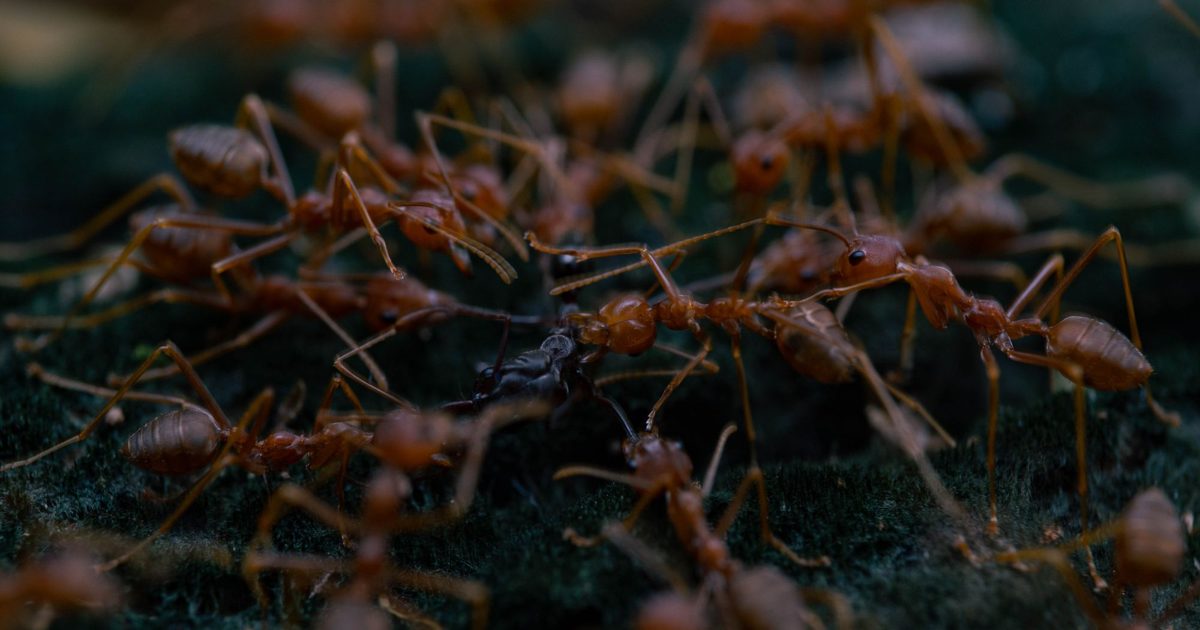
Fire ant control keeps a yard usable. Red imported fire ants build mounds in lawns, gardens and pastures, sting in groups and rebuild after every rain, and a fire ant program removes them with bait broadcast over the whole yard plus treatment of the active mounds. A working program brings 3 benefits: fewer stings for children and pets, fewer mounds in the grass, and colonies kept down through winter. This guide covers where fire ants live in Texas, how to spot a mound, why the ants return, the 2-step bait method from Texas A&M AgriLife Extension and what to ask a licensed exterminator.
Where do fire ants live in Texas?
Red imported fire ants infest more than the eastern two-thirds of Texas, plus some urban areas in the west. Yards in Houston, Dallas, Austin and San Antonio sit inside that range. On the cold, dry High Plains around Lubbock and Amarillo, fire ant mounds are smaller and harder to spot, and colder winters push the northern populations back.
How do you know a mound belongs to fire ants?
A fire ant mound is soft, worked soil, rarely over 18 inches (46 cm) across, with no central opening. Many native ants build a mound with a hole at the top, and a fire ant mound has none.
Fire ant workers swarm up anything that disturbs the mound and sting together. The stings often leave a white pustule on the skin. About 1% of people are highly sensitive to fire ant venom. Get medical help right away, if shortness of breath or swelling of the tongue follows a sting.
Why do fire ants keep coming back?
Fire ants return after wet years: the Texas A&M fire ant project records more mating flights and more new colonies in wet years. Treating one mound leaves the rest of the yard untreated, so a yard-wide plan works better than chasing single mounds.
Home remedies do not solve the problem. Texas A&M advises against pouring gasoline on a mound and against home remedies such as instant grits.
What is the Two-Step Method?
The Two-Step Method from Texas A&M AgriLife Extension has 2 parts: broadcast a fire ant bait over the whole yard once or twice a year, and treat the active nuisance mounds between baitings.
- Broadcast bait. Spread bait across the whole lawn, once or twice a year.
- Treat nuisance mounds. Treat a mound near a door, a play area or a walkway on its own between the broadcast baitings.
Timing changes the result. Fall baiting from late August through October suppresses colonies over winter. Bait works best when temperatures sit between 65 and 95 degrees F (18 and 35 degrees C).
| Season | What to do |
|---|---|
| Late August to October | Broadcast bait to suppress colonies over winter |
| A second baiting | Broadcast bait again, if the yard needs two baitings a year |
| Any time mounds appear | Treat the nuisance mounds near the house |
When should you call an exterminator for fire ants?
Call an exterminator for fire ants when mounds return after your own baiting, when the yard is large, or when a sensitive person lives in the house. A company that treats fire ants for pay holds a license from the Texas Department of Agriculture (TDA), and the TDA licensing rules cover lawn and landscape companies that treat insects around homes. Ask 4 questions before the first visit:
- Which license number does the company hold?
- Does the plan use broadcast bait, mound treatment or both?
- How many visits a year does the plan include?
- Which product goes down, and where?
The applicator makes the state’s information sheet available for an outdoor treatment at a private home. Check a license on the TDA consumer information page or call the Structural Pest Control Service at 866-918-4481.
Where do you find fire ant control near you?
Find fire ant control on the fire ant control companies page, which lists every company that offers the service, or on your own city page in the city list. Each listing shows the Google rating, the review count, the services the company names and its phone number. For termites, the termite signs guide covers the 3 signs to look for.